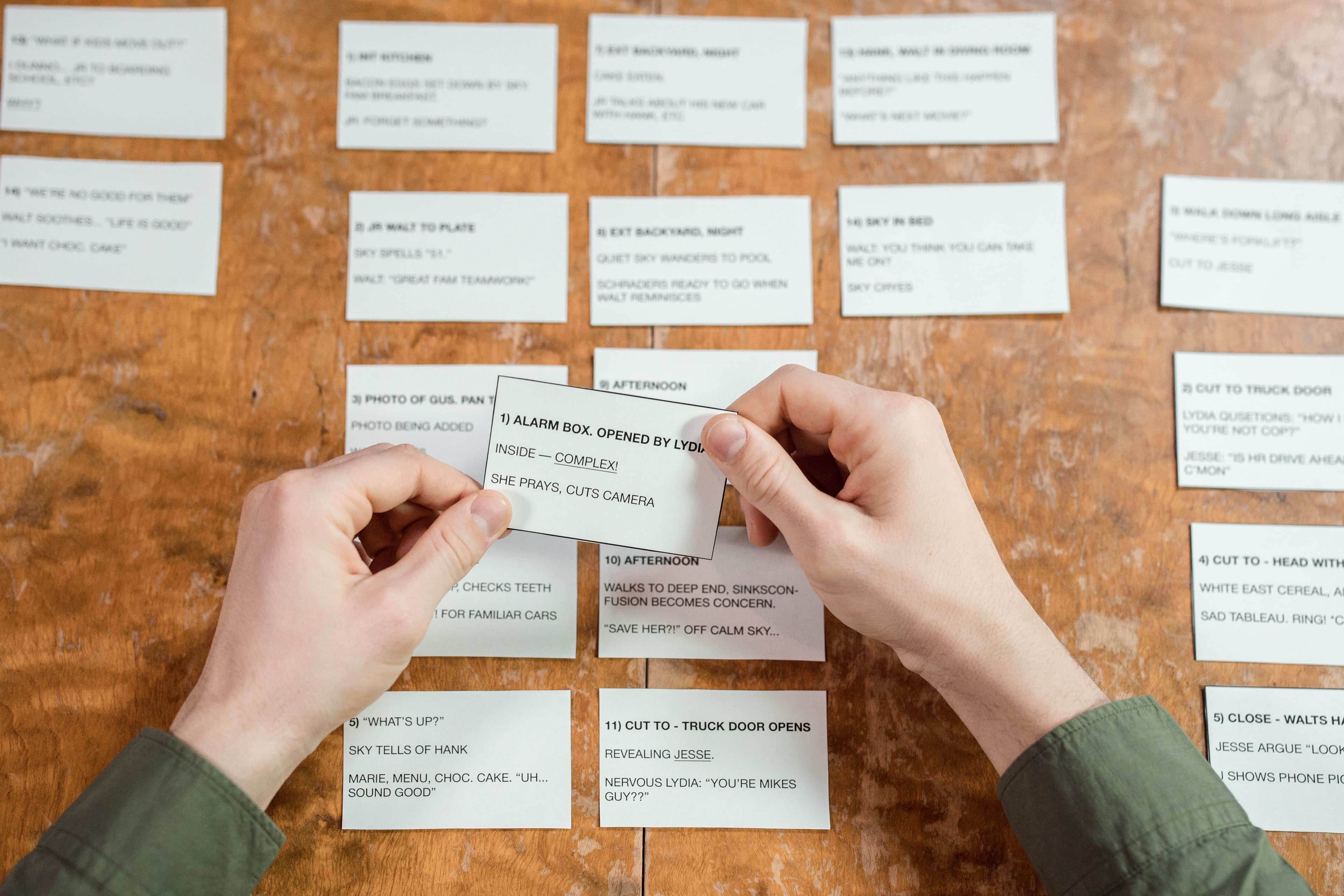
The blank-page problem nobody admits to
Most creators do not have a talent problem. They have a "what do I post today" problem. Every session starts from zero, the ideas feel scattered, and the feed ends up looking like a pile of unrelated experiments instead of a brand. The usual fix is to brainstorm more topics, which only makes the scatter worse.
Content pillars solve this, but only if you understand what they actually are. Pillars are not boxes to fill. They are recurring identity themes that help the audience understand what the creator keeps saying. They are a memory system, not a content calendar. A creator who has three clear pillars never truly starts from zero — they start from a known theme and find a new way to express it today.
Consider two producers who both post daily for six months. The first picks a different topic every day: a gear review, a meme, a rant about streaming, a mix tutorial, a flex post. Technically varied. Algorithmically scattered. The second rotates through three consistent themes: what makes a sample feel timeless, the creative decisions behind their own tracks, and the gap between how bedroom producers think and how professionals actually work. Six months later the first creator has a miscellaneous channel. The second has an audience that can describe them in ten words to a friend. That is the difference pillars make.
This pillar thinking is part of the strategy library Linx in LinkSplash Pro draws on. If you would rather not design your pillars by hand, you can upgrade and have it propose a starter set from your niche and your best-performing posts, then pressure-test them with you. The walkthrough below gives you the same method directly.
Why a small set of themes beats endless ideas
A creator generally needs a limited set of recurring identity themes, then repeated exposure to those themes through different formats. Three to five durable pillars is plenty. The instinct to keep adding new directions usually comes from boredom on the creator's side, not from the audience, who has seen far less of you than you think.
Most creators feel repetitive long before the audience has enough repetition to remember anything. That gap is exactly where strong pillars do their work. While you feel like you are saying the same thing again, the audience is finally starting to register it for the first time. Think about how music works: a great hook has to play three times in a song before most listeners can hum it back. Content is no different. The theme needs to appear many more times than feels comfortable before it has a chance of sticking.
The other reason to keep the pillar count low is depth. Three durable themes explored from twelve different angles produce richer, more authoritative content than twelve thin themes each covered once. Depth within a pillar builds credibility. Breadth without depth just makes the feed look busy.
- Keep three to five durable themes active at any time.
- Give each post one job inside one pillar instead of spreading it thin.
- Return to the same tensions, beliefs, and proof points from different angles.
Repeat the theme, vary the container
Here is the move that keeps pillars from getting stale: you do not need a new core idea every week. You need better containers for the same deeper story. The same identity signal can show up as a talking clip, a meme format, a voiceover, a tutorial, a hot take, a reaction, a behind-the-scenes moment, a performance clip, or a story-driven monologue.
Variety should live in the container, not in a random new strategic direction. When the theme stays stable and the format rotates, the audience gets the recognizability of repetition with the freshness of variety. That is the combination that compounds.
A DJ with a pillar around "why the crowd does not dance until the second hour" can express that idea as a talking-head explanation on Monday, a clip from a real set with commentary on Wednesday, a meme about openers on Friday, and a behind-the-scenes of their setlist planning on Sunday. Four different formats, four different moods, one consistent idea being taught from four angles. By the end of the week that audience understands the pillar more deeply than if they had watched four different tutorial topics. The container rotated; the brand accumulated.
When a pillar feels boring, it is usually unclear
If a pillar feels stale, the problem is almost never the theme. It is weak framing. Strong pillars keep producing because the creator keeps finding sharper, more legible, more emotionally specific ways to make the same signal land. "Boring" is usually a clarity failure wearing a costume.
Simple, true, clear ideas usually outperform overcomplicated strategy. The work is not to become more clever. It is to become more legible. When you feel the urge to abandon a pillar, try making it clearer before you replace it.
A useful diagnostic: take the pillar statement and try to compress it into a single sentence a stranger could understand. If you cannot, the pillar is probably too abstract to be useful, and the answer is to sharpen the statement, not to scrap the theme. "I make music inspired by old records" is abstract. "I produce R&B that sounds like it was recorded in 1974 because modern drums are too clean" is a pillar that can carry a hundred posts without running dry, because the specificity keeps opening new angles: the gear decisions behind that sound, the vocal processing, the arrangement choices, the way drums are mixed, the reference records, the creative process. One precise statement, endless expressions.
Let the destination hold the whole world
Pillars keep your content focused, which means each post can do one job and trust the rest of the picture to live somewhere stable. That somewhere is your owned destination. When a new fan finally gets curious about the full world behind your pillars, they need a place that shows all of it at once — the releases, the story, the links, the next event, the way into the community.
Social content is by nature episodic. Each post is a chapter, and no single post can carry the whole book. A strong owned destination is the book: coherent, complete, always available. Without it, every fan who gets curious enough to want more runs into a dead end or, worse, a generic link list that contradicts the precise identity they just spent weeks learning to associate with the creator.
A LinkSplash brand home does that. Your themes, releases, links, and next steps live in one branded page instead of being scattered across platforms, so the pillars you repeat in content have a permanent home to point to. It is free to start. And if you want help turning loose themes into a real pillar system, Linx on Pro will build and refine them with you using exactly the method in this article.