Growth Lab
You don't have to do it alone.
The library is only the start.
Growth Lab collects high-signal creator growth, music marketing, launch, content, and brand strategy from fast-moving people and advisor-level playbooks. Pro users can talk to Linx and have that library applied to their own page, release, drop, content plan, or audience workflow.
Read More§ Latest
01

You are renting your audience. Here is how to own it.
Every follower you have lives on a platform that can change the rules tomorrow. Here is the difference between attention you rent and an audience you own, and why your destination is the only part you actually keep.
6 min read

Start smaller than you want to
The instinct to build the whole thing before anyone's asked is the most expensive mistake in creator growth. Test the interest first. Build only what the demand earns.
6 min read
§ Browse
02
All Posts
47 posts sorted by date
Browse the operating notes behind creator brand homes, owned audience capture, promotion systems, and practical growth work.
You are renting your audience. Here is how to own it.
Every follower you have lives on a platform that can change the rules tomorrow. Here is the difference between attention you rent and an audience you own, and why your destination is the only part you actually keep.
Start smaller than you want to
The instinct to build the whole thing before anyone's asked is the most expensive mistake in creator growth. Test the interest first. Build only what the demand earns.

Every objection is free content strategy
The hesitation, confusion, and pushback you dread are the most honest market research you'll ever get. Stop defending against objections and start mining them.

Stop guessing what your audience wants. Watch what they do.
Your opinion about what your audience wants is a hypothesis, not data. The real answer is already in what they reply to, ask about, and show up for.

You will not think your way to better content. You will publish your way there.
Quality isn't something you plan into existence before you start. It's something you earn by shipping enough to see your own patterns. Volume is the teacher.

The creators who publish most have the fewest daily decisions
Consistency isn't discipline. It's a system. The creators who never miss a week aren't more motivated than you. They've just removed the questions that stop you.
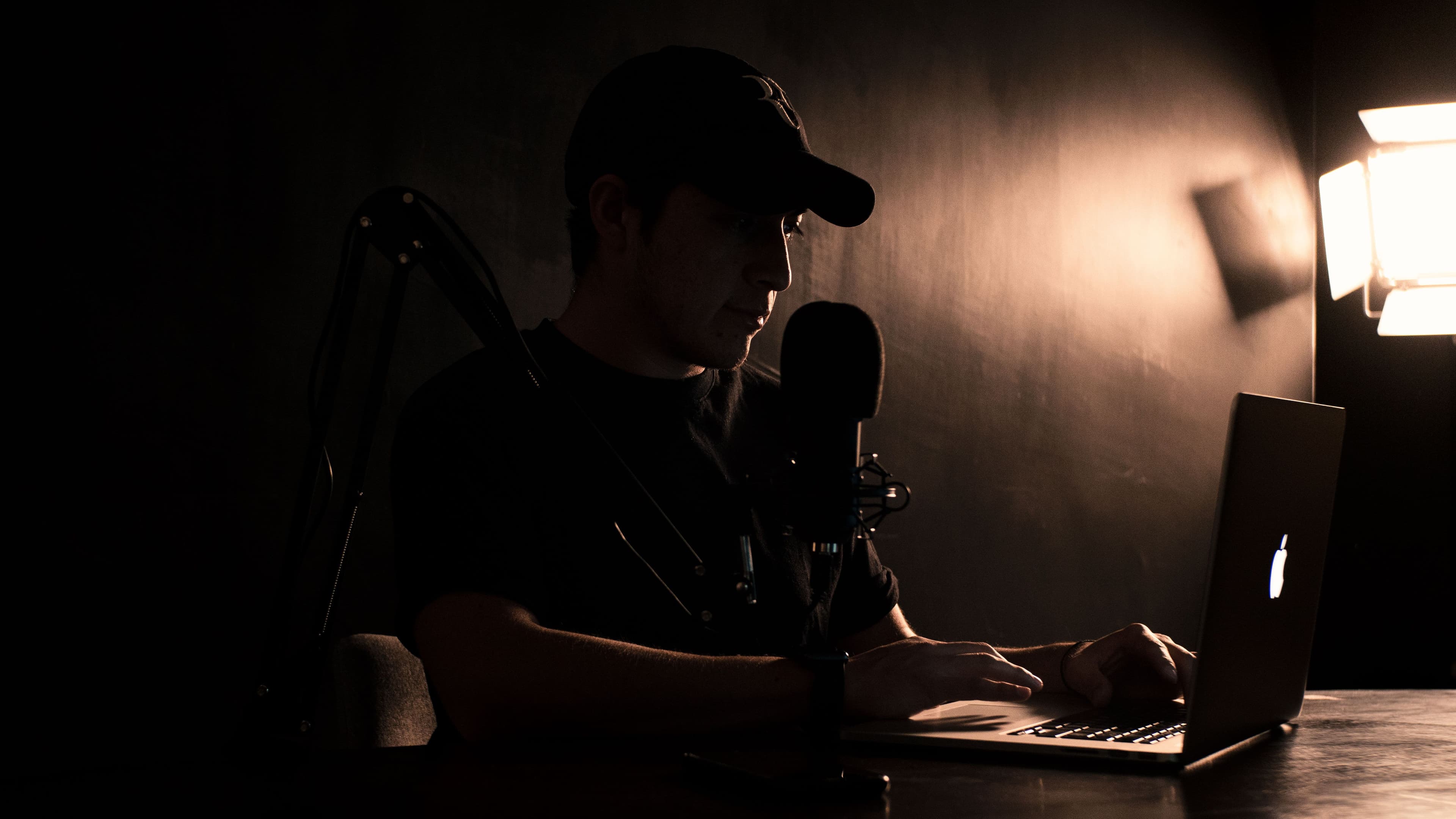
Bad audio reads as amateur before you say a word
Of every dollar and hour you could spend on production, clean audio returns the most. People forgive a rough picture. They never forgive sound they can't stand.

Fix what the viewer notices first: light, sound, framing, separation
You don't need a better camera. You need the four things a stranger judges in the first second to be clean, clear, and easy to read.
The same post lands harder when you have proof
Two creators can post the identical thing and get completely different responses. The difference is often credibility. Here is how demonstrated results and visible proof change the way your content is received, before a word is read.
You do not need new ideas. You need better containers.
The blank page is not an idea problem. You already have the few things you keep wanting to say. What you need are more ways to say them. Here is how to express the same pillar through endless formats without running dry.

High effort is not the same as high value
You poured hours into that post and it went nowhere, while a simple one outperformed it. Effort is not what people respond to. Clarity is. Here is why legible and memorable beats elaborate and clever almost every time.

Your music should feel embedded, not pasted on
When the track shows up as a tacked-on plug at the end, people feel the seam and tune out. When it feels native to the content, the same promotion lands without ever feeling like a pitch. Here is the difference.

Recognizable, not repetitive: building a world that still varies
Consistency does not mean posting the same thing on a loop. It means everything you make feels like it comes from the same world. Here is how to be instantly recognizable while keeping your content varied and alive.
Stop asking what to post. Ask what your brand keeps saying.
"What should I post?" is the wrong question, and it is why you feel stuck. The stronger question is what your brand should keep saying. Here are the five things a recognizable creator brand repeats until people remember.

Every post is meeting a stranger. Write for them.
The feed serves your work to people who have never heard of you. If a post only makes sense to fans who already know the backstory, it dies on contact. Here is how to make every post legible to someone with zero context.
The next step feels risky. Here is how to lower it.
Every time you ask someone to act, they quietly weigh the risk. Small shifts in how you frame the next step can make it feel safe enough to actually take.

When your content starts smelling like an ad
The best short-form content sounds like someone saying something true in a sharp way. The moment the optimization shows, the spell breaks. Here is how to stay native.

Stop listing features. Translate them into meaning.
Nobody falls in love with a feature list. Here is how to turn what your product does into what it means for the person on the other side.

Write like one creator talking to another
The fastest way to lose a fellow creator is to sound like a brand talking at them. Here is how to write like you are actually in the room together.

Why the best creator posts never feel like a pitch
The posts that actually sell rarely look like selling. They teach something true, name a real frustration, and let the solution emerge on its own. Here is how educational persuasion creates the accidental sale.

The simple arc behind almost every script that converts
The scripts that quietly turn viewers into fans tend to follow the same five-part shape: hook, tension, insight, an earned product bridge, and a soft close. Here is the arc and how to use it without sounding like an ad.

Stop opening with hey guys, so today
Greetings, warm-ups, and slow setups quietly kill your best clips before the idea even arrives. Here is how to spot the throat-clearing in your openings and cut straight to the reason someone should stay.

The three hooks that actually stop the scroll
Most hook advice is a list of gimmicks. There are really only three durable openings that work: name a tension, show a result, or make a claim worth arguing with. Here is how to use each one.

Your script is not a cleaned-up transcript
Tidying up what you said into your phone is not the same as writing a script. Here is why the strongest short-form writing is composed, not transcribed, and how to make it feel native to say.
Creator brand strategy that makes content build memory
Most creators post to be seen. The ones who grow post to be remembered. Here is the difference, and how to make every post teach a stranger who you are.
Content pillars for creators that repeat without getting boring
Pillars are not content buckets to fill. They are memory systems. Here is how to return to the same few identity themes for years and still feel fresh.

Short form video hooks that make the first seconds clear
The opening of a short video is the most valuable real estate you own. Here is how to make the first seconds create tension, curiosity, or a clear payoff before the viewer drifts.

Creator production setup: the 80/20 quality system
Production value is a multiplier, not the foundation. Here is the 80/20 setup that makes your work look credible without turning publishing into a chore, plus the friction audit that keeps you posting.
Audience validation: turn comments into content strategy
Your audience is already telling you what to make next. Here is how to read repeated questions, objections, and confusion as demand-backed inputs for sharper content and offers.
Artist brand identity: build a world around your work
For artists, growth is not about reach. It is about clearer association between face, sound, taste, story, and emotional territory. Here is how to build a world people can recognize.
Link in bio strategy that teaches new fans what to do next
A stack of links routes traffic but builds no memory. Here is how to turn your link in bio into a brand home that orients cold visitors and points them to the right next action.
Personal brand memory: what should strangers remember?
A personal brand is not built by being seen. It is built by being remembered for the right things. Here is a practical pre-post filter that makes content legible to the audience you actually want.
Content workflow systems that reduce decisions and publish more
The creators who publish consistently are not more disciplined. They have removed the daily decisions. Here is how to build templates, defaults, and loops that put your energy back into the message.
Why being for everyone makes you no one
Trying to appeal to everyone gives the audience nothing to remember. Here is how a real point of view helps the right people recognize themselves in your work, without manufacturing controversy.
Emotional specificity in content: name the feeling people already carry
Generic positivity is forgettable. The content that resonates names a tension, contradiction, or desire the right audience already feels. Here is how to write from feeling, not just topic.
One post, one job: a clearer framework for creator content
Most weak posts are trying to do five things at once. Here is why giving each post a single job makes it clearer, more memorable, and easier to act on.
Interpret the work, do not just document it
Showing that something happened is not the same as showing what it meant. Here is how interpretation turns raw footage into content that builds attachment to your work.
The quiet phase: why your early content is not wasted
Early content can feel unrewarded long before it compounds, and underperforming posts are not lost work. Here is how to survive the low-signal phase and why your back catalog becomes stored value.
When going viral actually hurts you
Not all performance is progress. A post can do numbers and still weaken your brand by attracting the wrong people. Here is how to tell real movement from misleading reach.
Why your carousels suck even when the advice is good
Most weak carousels do not fail because the topic is bad. They fail because the sequence repeats itself, hides the proof, and reads like a tiny PDF. Here is what actually breaks them.
Your carousel dies when slides 2 and 3 depend on slide 1
The first three slides are not a slow intro. They are three related hooks, each one able to stand alone for a cold reader. Here is why that distinction decides whether your carousel travels.
Your carousel loses trust when the proof shows up too late
Readers need a symptom, number, screenshot, or consequence by slide 2 or 3, not after five slides of teasing. Here is why early proof is what makes the rest of the carousel land.
Your carousel feels like a PDF because every slide is doing too much
One idea per slide is not a design preference. It is what keeps the reader moving instead of turning your post into homework. Here is how to make simple slides that still teach.
Generic carousel tips fail because they never explain the mechanism
Your audience has heard "post more" and "be consistent" a hundred times. The middle of a carousel should explain why the problem happens, not repeat advice. Here is how to teach the mechanism.
Your carousel turns into an ad when the CTA shows up too early
Pitch before the reader understands the problem and the whole post reads like an ad. Here is how to time the CTA so it resolves the lesson instead of interrupting it.
You are wasting winning content if you never turn it into carousels
Your best Reel, thread, or newsletter already proved it resonates. Here is how to condense a proven winner into a sharper carousel instead of reinventing the idea from scratch.
Carousels are not dead. Yours might just be lazy.
Benchmarks and platform experiments still favor carousels. The weak part is usually the writing, the proof, and the slide arc, not the format. Here is the evidence and the fix.