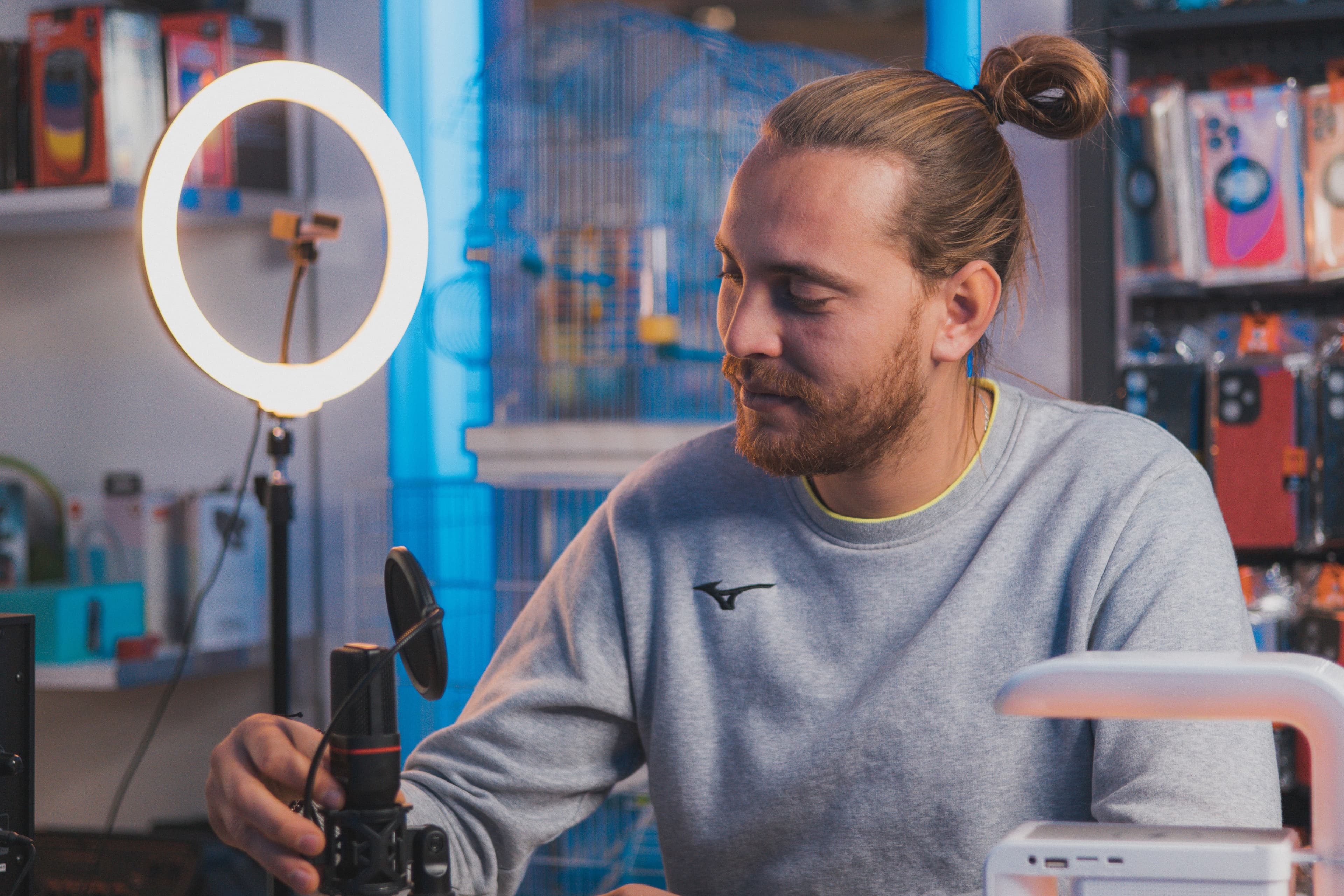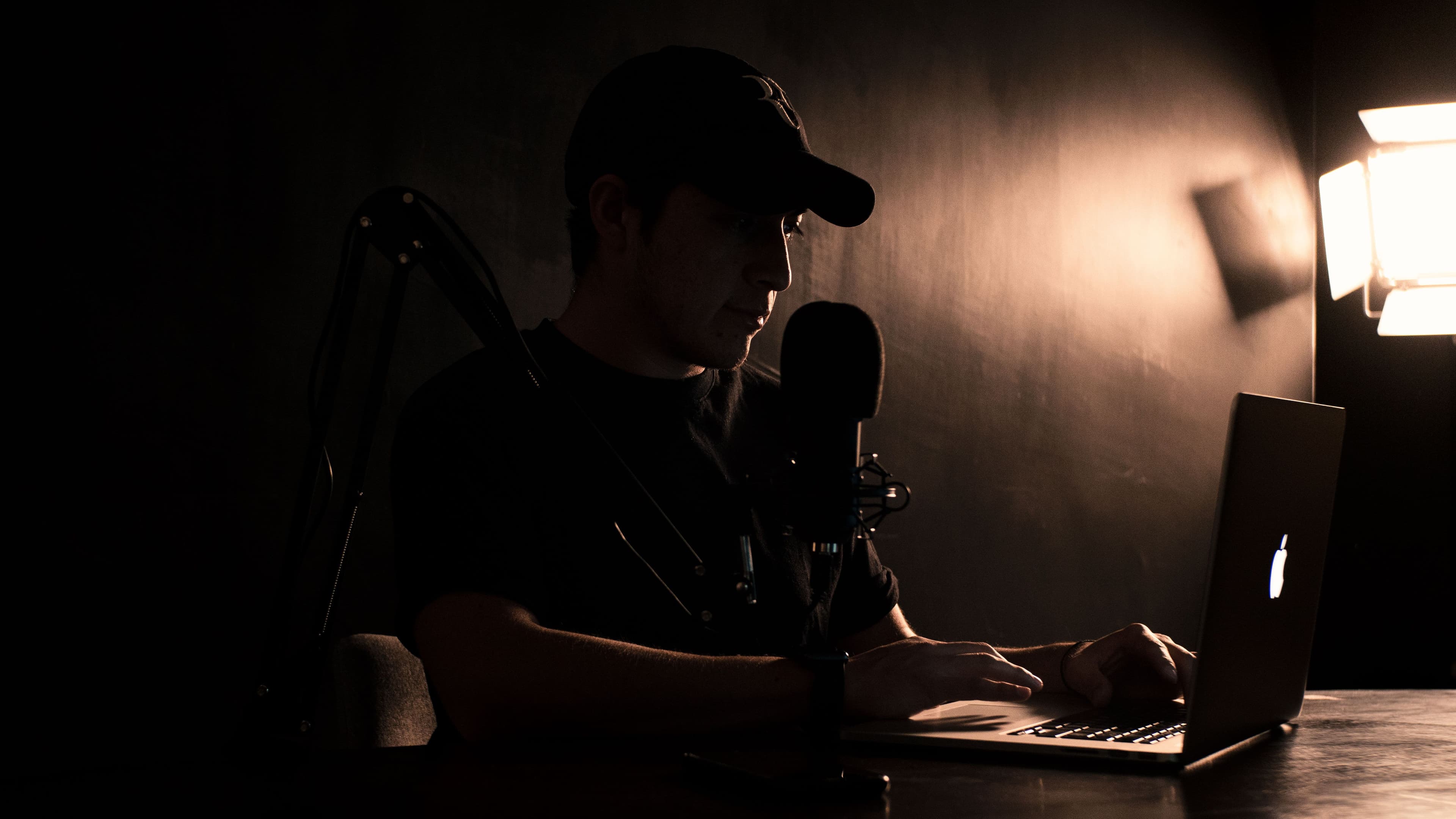
The clip wasn't bad. It just looked like it didn't matter.
You filmed something good. The idea was sharp, you said it well, and you were proud of it. Then it went out and did nothing, and you couldn't figure out why. So you did what most of us do: you assumed the problem was gear. You started pricing cameras, a nicer mic, a light kit, maybe a whole new setup, because surely the reason a stranger scrolled past was that the picture wasn't crisp enough.
Here is the uncomfortable thing. A cold viewer is not grading your sensor. They are making a snap read in the first second about whether this looks like something worth their attention, and that read is built from a much shorter list than you think. They notice whether they can see your face. Whether the sound is clean or muddy. Whether the shot is so cluttered they can't tell what to look at. That's most of it.
I have watched DJs with expensive setups get scrolled past, and I have watched a producer film a take on an old phone, in front of a blank wall, with one cheap light, and stop people cold. The difference was never the resolution. It was that the second one was instantly legible. You knew who you were looking at, you could hear every word, and your eye landed exactly where it was supposed to.
Linx in LinkSplash Pro can help here too. Paste in a description of your current setup and the kind of content you make, and it will tell you which production fixes will actually move the needle before you spend a dollar. The rest of this article is that thinking written out so you can apply it yourself.
Production is a multiplier, not the foundation
Let's get the mindset right first, because it changes every decision after it. Production value does not replace good content. It cannot. A beautifully lit, perfectly mixed clip of a boring idea is still a boring clip, and no amount of polish saves it. People sometimes hear "production matters" and assume the fix for weak content is more gloss. It isn't.
But the opposite mistake is just as common, and it's the one I see in music circles: "production doesn't matter, it's all about the music." That's also wrong. When the content is already good, production value increases how credible it feels, how long people stay, and how fast you grow. It's a multiplier. A multiplier on zero is still zero, but on something real it's leverage.
So the honest framing is this: get the idea right first, then make sure the production isn't actively working against you. You are not chasing maximum polish. You are chasing enough quality that the work feels credible, without the setup getting so heavy that it slows you down and you stop posting. That sweet spot, where it's good enough and still fast enough to repeat, is the whole target.
The four signals a stranger actually judges
If production is a multiplier, the question becomes: which knobs give you the most multiplier for the least effort? The answer is boring and it's the same every time. Focus on the few elements that most directly affect perceived quality, and ignore the rest until those are handled.
Here's the short list, in roughly the order a cold viewer processes it. Each one is cheap to fix and disproportionately powerful.
- Light on the subject: a viewer needs to see your face clearly, with the light landing on you rather than behind you. One soft light pointed at you, or a window you're facing, beats a dark room with an expensive camera.
- Clean audio: muddy, echoey, or distant sound reads as low effort in under a second. Getting the mic close and killing room echo does more than any visual upgrade you could buy.
- Legible framing: the shot should make it obvious what to look at. You, centered or intentionally placed, with your head not cut off, is enough. Don't make the eye hunt.
- Simple visual separation: when the subject stands apart from the background, even slightly, the brain reads it as more produced. A plain wall, a bit of distance, or basic depth does this for free.
Why the final few percent is a trap
Once those four are handled, most creators make the same error. They start chasing the last few percent of technical polish, the color grade, the perfect blurred background, the plugin that cleans audio that was already clean. That work feels productive because you can see yourself doing it. But the viewer cannot tell the difference, and the time it eats is time you didn't spend making the next thing.
Think about it from the cold viewer's side. They are deciding in a second whether you're worth watching. They are not zooming in on grain. They are reacting to whether they can see you, hear you, and follow you. Once those are clear, additional polish is mostly invisible to them and very visible to you, which is exactly why it's a trap. It rewards your perfectionism, not their attention.
There's a music version of this I see constantly. A producer will spend hours getting a clip to look cinematic and no time making sure you can actually hear what they're saying over the track. The cinematic version reads as try-hard. The clear version reads as confident. Clarity beats effort, almost every time, because clarity is what the audience can actually perceive. We make the broader case for that elsewhere, and the companion to it is simple: of these four signals, clean audio is the one people forgive least, so fix it first.
The real point: legibility, not luxury
Here's the reframe to carry around. The job is not to make your content more impressive. It's to make it more legible. Impressive is about you. Legible is about them. When you optimize for legibility, the light, the sound, and the framing, you are removing the small frictions that cause a stranger to bounce before your idea ever lands.
And legibility compounds. Every clip that's easy to see, hear, and follow teaches the algorithm and the audience the same thing: this is a real brand, worth stopping for. A clean, consistent visual signal is part of how people start to recognize you on sight, which is the actual goal, not any single clip going off.
So before you buy anything, run the four-point check on your last three posts. Could a stranger see your face? Hear every word? Tell what to look at? Feel that you stood apart from the background? If any answer is no, you found your upgrade, and it probably costs less than the camera you were eyeing.
Make the destination as clear as the clip
Here's the part most creators forget. You can nail the light, the audio, and the framing, win the stranger's attention, and then send them to a link that undoes all of it. If your clip reads as a real brand and your link-in-bio reads as a generic, cluttered list of blue links, you've created the exact mismatch you just spent effort avoiding. People read your level from the first visit, and a thin list of links looks like the dark, muddy version of a landing page.
That's the gap LinkSplash is built to close. Instead of a thin link list, you get a real brand home, a page that's as legible and intentional as the clip that earned attention, where someone can immediately see who you are, hear or see the work, and take the next step without hunting. It's free to start, so you can give the destination the same clarity you give the content without another subscription to justify.
And on Pro, Linx applies this same clarity-of-signal thinking to your page itself. Paste in your release or your current page and ask it what to make clearer, what to cut, and what a cold visitor sees first, the same three-question check you'd run on a clip. Fix what the viewer notices first, all the way through the landing experience, and the work you already made finally gets the attention it earned.