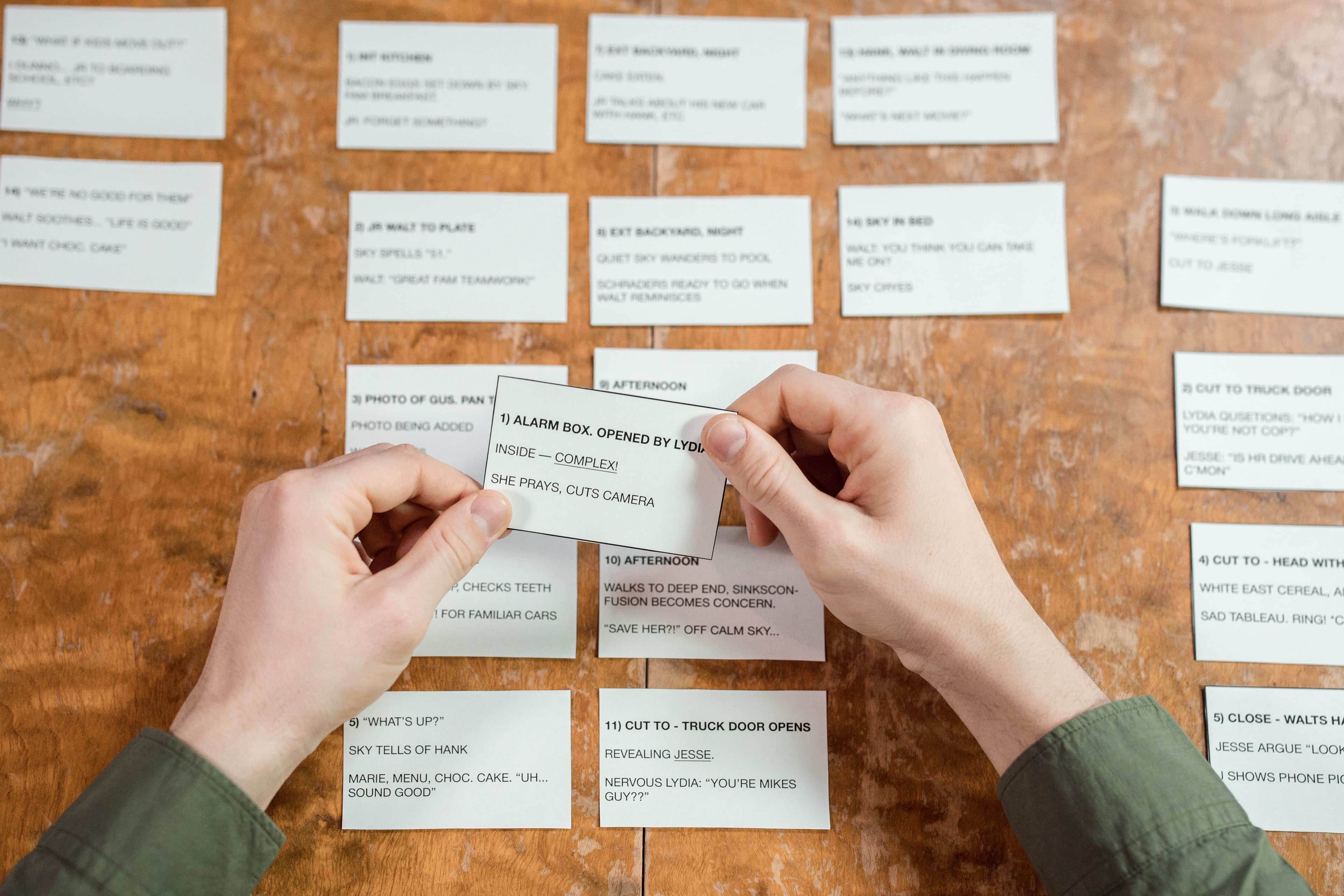
The post that tries to do everything does nothing
A familiar trap: you sit down to make one post and try to introduce yourself, explain your whole philosophy, prove your results, sell the offer, and entertain, all at once. The result feels busy and lands flat, because a viewer cannot follow five jobs in a few seconds. Effort goes up, clarity goes down, and the memory signal disappears.
Think about what that looks like in practice. An independent artist drops a new single and creates one Instagram post that tries to announce the release, share the backstory behind the lyrics, tag the producer, link the merch, and ask fans to save and share. Each of those is a legitimate thing to communicate. Crammed into one caption and one set of slides, though, none of them land. A fan who just discovered the artist does not know where to look first, and a longtime fan feels like they received a newsletter instead of a moment. Both leave without doing anything because no single next step was made obvious.
Stronger posts usually have one main job. That single focus makes the structure easier to follow and the takeaway easier to remember. Weak content tries to do too much. Clear content does one thing well and trusts the rest of the system to carry the rest. The announcement post announces. The backstory post tells the story. The merch post shows the merch. Each one is shorter, sharper, and more likely to earn the specific action it was designed to earn.
This one-job discipline is part of the content framework Linx in LinkSplash Pro uses. You can bring it a messy idea and ask what the single job should be, then build the post around that, exactly as described here.
Pick the job before the format
The job should come before the format. A story, tutorial, carousel, talking clip, or meme can all work, but only once you know what the post is for. Choosing the format first is how posts end up doing a little of everything and none of it well. Format selection is really just a delivery decision, and you cannot make a good delivery decision until you know what is being delivered.
Consider a DJ promoting an upcoming club night. If the job is "build curiosity about the set," a thirty-second mix clip with no caption beyond a date does that job cleanly. If the job is "get people to buy tickets," the post needs to name the venue, the lineup, the price, and one clear link. Those are two different jobs and they belong in two different posts, sequenced across a campaign rather than fused into one confused piece. Trying to do both at once produces a clip with too much caption that satisfies neither goal.
Once the job is clear, the format becomes an obvious choice instead of a daily negotiation. The format is a delivery vehicle, not the strategy.
- Introduce a perspective.
- Build curiosity.
- Explain one problem.
- Reinforce one pillar.
- Send people to one next step.
One job makes the memory signal clean
When a post has one job, the viewer leaves with one clear impression instead of a blur. That clarity is what makes content memorable and what teaches the distribution system who the post is for. A focused post is easier to recognize, easier to recall, and easier to act on.
Memory is built through repetition of clear signals, not through a single dense post. Each one-job post deposits one clear association into the audience's understanding of who you are. Over time those deposits compound: the artist who posts one behind-the-scenes moment, one emotional hook about the record, one performance clip, and one ticket link across four separate posts has given the algorithm four clean signal inputs and given the fan four distinct moments of recognition. The artist who tried to fit all four into one post gave both the algorithm and the fan a muddy signal that produces nothing.
It also makes your content easier to produce, because you are no longer trying to cram a whole brand into a single piece. Each post carries one idea, and the brand accumulates across many of them. This is also what makes a content calendar feel manageable: when each slot only needs one clear job, planning a week is just a matter of listing the jobs the week needs done.
A campaign is just several one-job posts in sequence
The one-post-one-job principle is what turns a pile of disconnected posts into a campaign. A release campaign for a new track might need six distinct jobs: tease the artwork, explain the story behind the song, share a clip, capture emails for early access, announce the release date, and ask fans to share. Each of those is a separate post. Together, spaced across a week or two, they tell a complete story without any single post having to carry the whole weight.
This is also why the approach scales. An independent artist with a small but loyal audience can run a methodical campaign that feels considered and intentional, not because they have a big team, but because each post is simple enough to produce cleanly and specific enough to land. A talent buyer or booking contact who scrolls back through the feed sees a coherent story rather than noise, which tells them something real about how the artist operates.
The job-before-format principle also protects campaign momentum. When a post underperforms, you can diagnose exactly what went wrong: was the job unclear, was the format wrong for the job, or was the timing off? That clarity makes the next step better. Trying to diagnose a five-job post is nearly impossible because there is no way to know which of the five things was the problem.
Let the page hold the rest
A single post does not need to carry your whole business. The deeper context, the links, the offers, and the proof can live on your owned destination, which frees every post to stay focused on its one job. The post earns attention; the page does the rest.
This is the relationship between a content strategy and a brand home. If every post is trying to introduce the artist, explain the music, list the shows, link the merch, and capture emails simultaneously, it is usually because the creator has no stable place where all of that already lives. The post ends up doing the page's job because there is no page capable of doing it. Once there is a real brand home, each post can be as specific as it needs to be, and the destination handles everything else.
A LinkSplash brand home is built to be that home base. Unlimited sections and content cards mean the page can hold the full picture, so individual posts can stay sharp and singular. It is free to start, and on Pro, Linx helps you decide each post's one job and where it should point.